


Vigorously Lazy

with Christopher Heavener

Blog

Thursday, July 8th

120 in 2010: When All Our Days Are Numbered…

gettingcarriedaway_toprint

Sasha Fletcher deals in extremes. In When All Our Days Are Numbered Marching Bands Will Fill the Streets But We Will Not Hear Them Because We Will Be Upstairs in the Clouds, there are only a couple characters and there are a lot of characters. There is very little happening and there is a lot happening. A man (husband? boyfriend?) is telling a woman (wife? girlfriend?) with some kind of affliction (blindness?) and extended story, a fantastic run-on where birds are plucked from within stomachs, whales swallow cruise ships, clouds and waterfalls insinuate themselves into the narrative at random. The only thing that appears to be important to the storyteller is momentum and excitement, almost as if he doesn’t have time to worry about plot and character, almost as if there will be real consequences to face if he doesn’t keep the story moving, if he doesn’t keep his audience interested and invested in what’s happening. Plot lines get abandoned and new ones get created, old ones get picked up again and attempts are made to connect them with the new ones. It’s like spending an afternoon in a backyard with a kid with ADD, but in a good way, like only in the exciting and engaging way that kids with ADD can be.

When is a different kind of love story, one where the love between a man (with a thought process like that of a slinky falling down an endless set of stairs) and his audience is the only thing that isn’t heavily expanded upon. There is no explanation as to why he’s telling her these stories, you’re left to figure that one out on your own. It’s not that Fletcher is refraining from insulting your intelligence by spelling things out for you, it’s that he’s got more interesting things to think about, say, a marching band procession leading a boat-full of people out of a whales mouth and down the street.

It could be a mistake to call this book whimsical. Whimsy has a bad connotation. When a writer tries to be whimsical it can often feel like they’re jerking you around, like they’re trying to have fun and be like a child again, which can be annoying because the writer is clearly old enough to have kids of their own and they should just grow the fuck up already. When does not contain this type of whimsy.

It’s a whimsy that deals with real emotions, a whimsy that deals sex and death, with love and loneliness, fear and anxiety. Whimsy has a connotation of lightness, of airy frivolity. Fletcher deals with tangible, life-changing things in a style that is, on its face, whimsical. But underneath, it’s a voice that has a deep understanding of what it means to be human, and what it means to be alive and constantly living in the moment, always moving forward.
Buy it from MLP.

DSC06486

Wednesday, July 7th

WTF, Chicago?

book bike

A few months back this blog saluted Gabriel Levinson, operator of the Book Bike. Chicago thinks the Book Bike is a threat to the public process and decided to shut him down. I think that is fucking bullshit. Absolute, utter bullshit. In spite of all the dubious and downright nefarious things the city of Chicago daily turns a blind eye to, their swift arm of justice has effectively obstructed one of the primary threats to Chicagoans: free literature. Way to go, Chi (slow clap). Way. To. Go. {via. Hat-tip to Vol. 1}

Monday, July 5th

Happy Birthday ‘Merica.

IMG_5465

Happy Birthday,  USA.

IMG_5485

I hope you did something yesterday to make you feel patriotic and I hope you didn’t work, like more than a few people did.

IMG_5488

If you did work, you probably felt like you were in Communist Russia. And last time I checked, this was still America. Tell that Rooski boss of yours to quit treading on you.

IMG_5492

I hope you ate some American food.

IMG_5530

And saw some things that reminded you why this country does, on occasion, kick much ass.

Thursday, July 1st

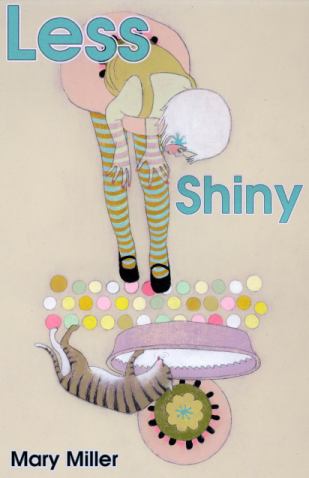
120 in 2010: Less Shiny.

cover_shiny_promo

If the goal of an artist is to sift through the layers of nonsense that permeate the world in order to find some truth, then a writer has to be prepared to look at the dark side of humanity. She has to be comfortable with shining a light on the negativity, the fear, the selfishness, the anxiety, all the crawling exoskeletal things that scatter when examining a person’s soul. They are a large part of what makes us human, and while they make you uncomfortable, to confront them is to overcome them. Mary Miller is unafraid to expose these darker parts.

There’s a quiet hostility to the women in Less Shiny. They desire to softly destroy, to silently devour the things around them. The characters deal with pain, betrayal and heartache but Miller presents it all without a trace of melodrama. The sentences are spare and stark. Her voice is calm, assured, unassuming.

In “April and Benny” a woman wants to sleep with a man but she is engaged to one of his friends so she figures the next best thing is to let him perform a home nose piercing on her. In “Boyfriend” a woman shares the secrets of her marriage with a man she’s having an affair with. In “A Blind Dog and a Colony of Bees” a woman accepts a ride home from a man on drugs and she imagines herself in a dark corner of his basement, pissing herself to stay warm. The image does not bother her.

Besides the writing, one of the interesting things about Less Shiny is how self contained it is. There’s a few blurbs on the back and a bio in the end pages, but for the most part it’s very matter-of-fact: a staple bound collection of 22 pages of short, short fictions. No headshot, no double title page, no back cover summery pontificating on the nature or meaning of the words therein, just the words. Much like the stories themselves, the book, as an object, reflects an aesthetic Miller wields with skill. The book does nothing to suggest the power that it holds beneath the surface. The cover is light and attractive, the artwork warm and inviting, but start to dig deeper and things become more complicated. Go even further and they begin to get dark very quickly.

Buy it here from Magic Helicopter.

Mary Miller

Tuesday, June 29th

What is Your Worth?

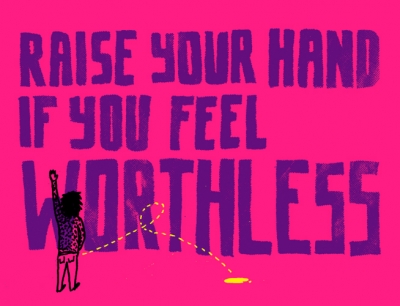
1_zine1worthless

(image by Ben Chlapek)

Do you ever ask yourself, “What am I really contributing to the good of mankind with this story I am submitting? Is the whole of the earth better off with this released into the collective consciousness?”

Or does it ever get to that point for you? Most writers of fiction are completely ego maniacal. Unapologetically obsessed with themselves. And not always in a narcissistic way, in a masochistic way too. This doesn’t always make them bad people. Just cause you have a huge ego doesn’t mean you’re a sociopath. And sociopaths are terrible writers.

What’s the point in writing something unless you know it’s going to be a spark of positivity in someone’s life, or at the very least, a spark of empathy? With every story you write, you should be asking yourself, “What is someone (anyone) going to get out of this?” The answer to that question should be the place where you judge your worth as a writer.

Anyone else think different?

Monday, June 28th

The Last Taboo.

corp_8-14-08_4261

(image by Michael Rubenstien)

Julia Whitty‘s dissection of the population crisis, The Last Taboo, at Mother Jones is a fantastic piece of journalism that will most likely change the way that you look at the world. The article is an impressive objective look at the issue of overpopulation that manages to skirt all the negative connotations, from racism to totalitarianism, that the subject tends to dredge up.

Whitty’s assertions: 1) Global birthrate must fall if the planet is to sustain all the people currently on it. 2) The most effective contraception is properly educated women who are prospering financially. 3) The most effective way of accomplishing this is through micro loans.

Friday, June 25th

120 in 2010: When You Say One Thing But Mean Your Mother

MOTHER-COVER-511x800

The poems in Melissa Broder’s collection begin with a spark of desire. The people who inhabit them are unsatisfied with what they have, the spoils of their good fortune carry an unforeseen dark side that they’re incapable of dealing with. Teenage waifs pray to be delivered from Burger King with People Magazine, Anarchists lament the next generation of revolutionaries bickering about the proper way to make dreadlocks in the hair care aisle of Duane Reade, a Wall Street yuppie abandons his designer apartment and Savignon Blanc for a skateboard and the faux spiritualist world of San Francisco.

At times it’s unclear if Broder is calling the upper class on their existentialist problems or if she genuinely feels for them. One moment she’ll pair a junkie-film enthusiast with a real junkie who’s peaking and using the film fan for his own perverse entertainment. Another moment she’ll be at odds with her own vanity, feeling shame over feeling shame over her pimples. Broder culls the suicide, the anorexia, the drugs, the pathologies and manias of the upper class into a spotlight and comes to the brink of indicting them, but not before trying make sense out of why these people feel the way they feel.

It’s interesting to read these poems in the wake of the financial disaster of ’08. They capture a moment in time where the well-to-do could complain about their problems while protected by a bubble of ignorance. It’s hard to believe that in today’s economic climate a Wall Streeter would give up any sort of job to go live an idealized skateboard dream. The fallout of the mortgage crisis robbed America of its privilege take issue with trivial things. In a way this collection is an quiet chronicle of American opulence.

But ultimately these poems are not about the well off dealing with the problems of the well off. They are about people who’ve developed in a frictionless life, one free struggle. Struggle that is important to shaping ones personality, to shaping ones ability to adapt and evolve. As a result, the people in Broder’s poems try on personalities like second hand clothes, hoping something will shape them, define them, stick to the walls of their souls and give their lives some meaning. But in the screaming light of the day it becomes clear that those clothes simply don’t fit. And where to go from there is a complete mystery.

Buy it here from Ampersand Books.

6a00e54fe4158b88330120a6447521970c-320wi

Thursday, June 24th

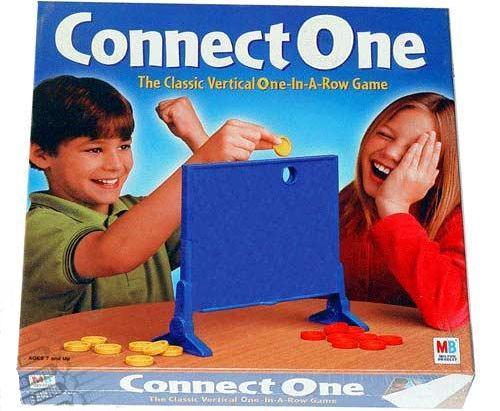
Connection.

connect-one_liver

Last week we had a discussion about community and it became clear that the majority among us indie lit writers and publishers (that felt moved to comment on this blog) believed that writing and publishing with the indie lit community in mind may not be the primary goal, but was very important to keep in mind.

Since then, it’s become abundantly clear to me that the writing that we produce and publish, the stuff that all this wall head beating is for, is being marketed by us, right back to us. We are the audience and we are the producers. It’s created a very clear niche.

The positive effect seems to be that with each powerful story that we write, with each novella and journal we publish, we seem to up the bar for one another, making a decent training ground for us to hone our chops in the hopes that we may be able to graduate to the big leagues. However, some of us are fine just where we are, harboring no interest in publishing with, or on the level of, a major publishing house. A lot of those guys have fucked the publishing industry into the ground with their inability to adapt to a changing market, so why would you want to have anything to do with them?

The negative effect is that the more we write and publish toward each other, the more insular we become, the more splinter factions of style choices are created, the smaller the niches grow until it’s Writer A writing a story for the singular audience of Writer B and vice versa, ad infinitum, the literary version of a circle jerk.

The problem: We, as an indie lit community, aren’t connecting to readers. Independent film has had its boom, and was shortly followed by a boom in independent music. It’s time independent literature had a boom of its own.

There’s a prevailing attitude these days is that no one reads anymore. This is bullshit. Books haven’t lost their power to speak to people and there are folks out there who want to read, they just don’t know what to read. When faced with an overabundance of choices, a person is going to go with what’s familiar. That’s why the bestselling authors stay bestselling authors and why it takes a new author at least a $100k marking campaign to tap into that list. There are people out there craving the good words we’re producing but we’re nowhere close to reaching them. However, as indie publishers and writers, we don’t really have $100k to throw around on marketing campaigns. So what can we do to connect with readers outside of our immediate circle? Do what we’ve always done: start small.

1. People react most to word of mouth. Recommendations are how people make choices on what book they’re going to read next. Did you love The Adderall Diaries? Suggest it to a friend. Did We Take Me Apart change your life? Pass it on to someone you love and tell them that it means a lot to you. Do book trades. Promise your girlfriend that you’ll read the Harry Potter books she holds so dear if she reads A Jello Horse.

2. Ask your friend’s band if you can sell your book at the merch table at their show. If you’re book looks lonely at the table all by itself then sell other books you like. Contact us publishers, I’d happily send out a stack of mags if someone said they were going to sell them for me at a rock show.

3. Start an indie lit book club! Holy crap are book clubs awesome, sitting around a friends living room one night a month drinking wine talking about books. Damn good times, my friend.

4. And blog, people. For the love of god, blog. If you love a book, write a review. It doesn’t even have to be a great review, you don’t even really need to say anything more poignant than, “This is a good book. Here’s why. You should buy it.”

There’s people outside of the writing game who are looking for good words and they’re not finding them. Instead they’re going with whatever’s on their immediate field of vision, meaning books published by corporate publishing houses. Last week my friend IM’d me saying he wanted to start reading some novels so he bought Never Let Me Go. However he claimed he had a short attention span and thought short stories would be more his speed. I sent him links to AM/PM, SFAA and A Common Pornography (the HP version. Technically not an indie lit book, but definitely a gateway to it). He added them to his cart at Powell’s almost immediately. People have a fever, they need good words to cure them. You are the doctor. Prescribe them some good stuff.

As writers we can’t sit back and let the publisher worry about how this is going to get into the hands of readers and vice versa. This is something we love and no one’s going to market this stuff for us, so the onus is on us as writers and publishers to get it out to people who are going to react to it.

These are just some beginning ideas on how indie publishers and writers can connect to readers. If you have nay others please shout them out in the comments. We’re all in it together.

Monday, June 21st

real/fake.

Picture 1

Digital designer, Judy Rush, offers insight into the realm of 21st century photo editing with real/fake. Rush pioneered the surreal aesthetic that’s been dominating the ad campaigns of Fortune 500 companies lately. real/fake shows the process, from digital editing software to old fashioned smoke and mirrors. It’s always interesting to see things get made. Is it just me or does it remind you of the writing process? You start with an image or a sound that captures your attention for wahtever reason and you try to create a world to give it some context. Strange that photographers and digital media artists have to rely on software to get their vision across. Sometimes it’s inspiring that all a writer needs is her noggin.

Friday, June 18th

Caitlin Hackett

Picture 1

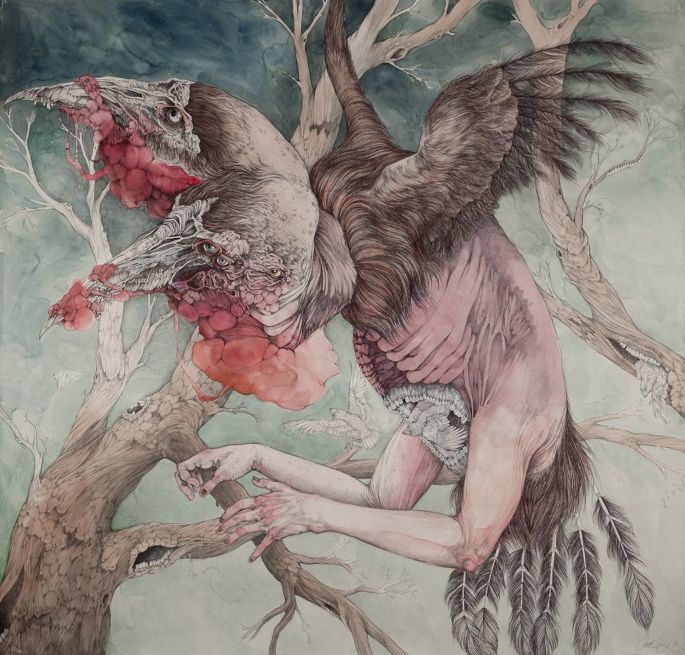
Check out the modern mythology of Caitlin Hackett. I’ve got half a mind to start an internet petition to get her and Matt Bell to work on a fucked up storybook together somewhere down the line. How sick would that be? {via}