Archive for the ‘FYI’ Category

Tuesday, July 20th

Book Bike Update.

Picture 1

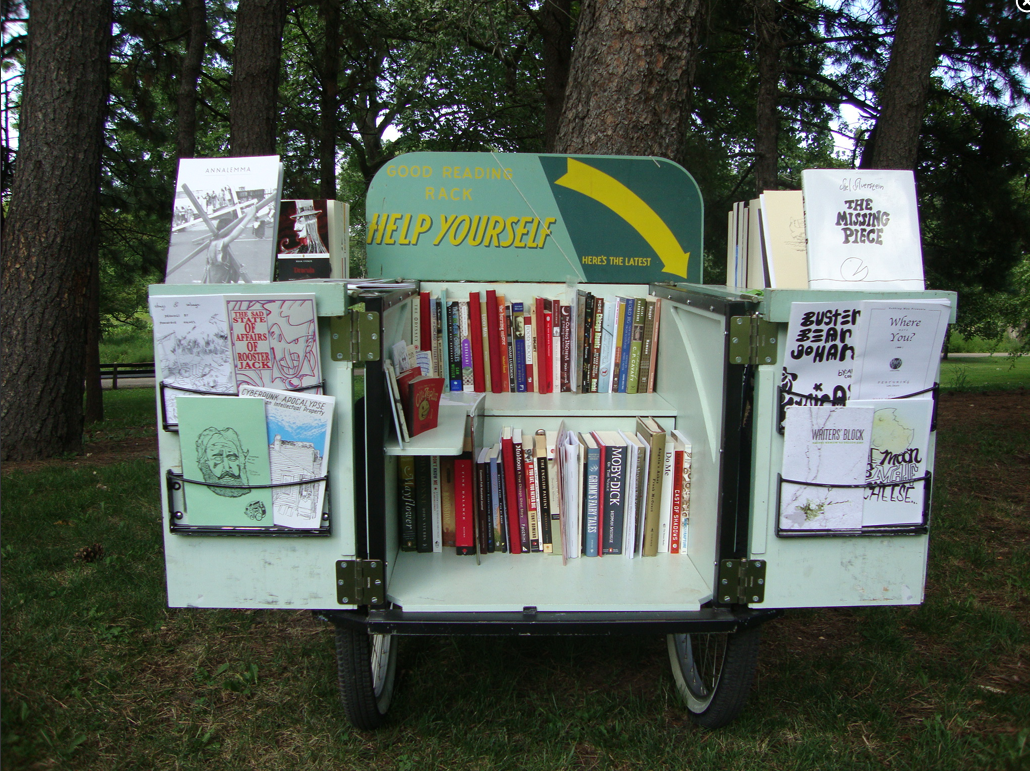
The city of Chicago was up to a whole heap of bullshit, as mentioned a couple weeks ago. Not sure how it happened, but the Chicago Public Library stepped up and got the Gabriel Levinson’s bike full of books out of the garage and back onto the streets where it belongs. Raise a glass once again for Gabe and the CPL for keeping an undeniably good project going.

Read a good interview with Gabe here.

Tuesday, July 20th

Scene Report: Soda Series #2.

IMG_5573

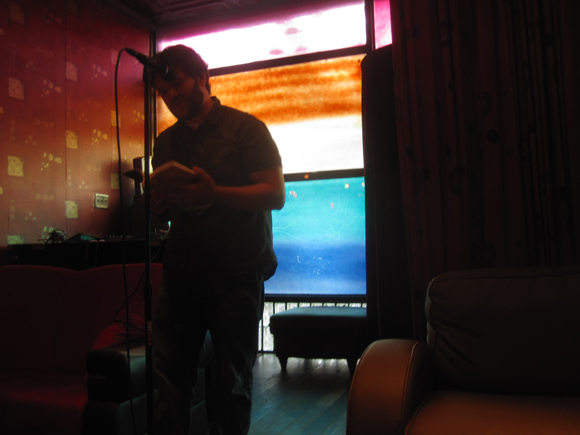
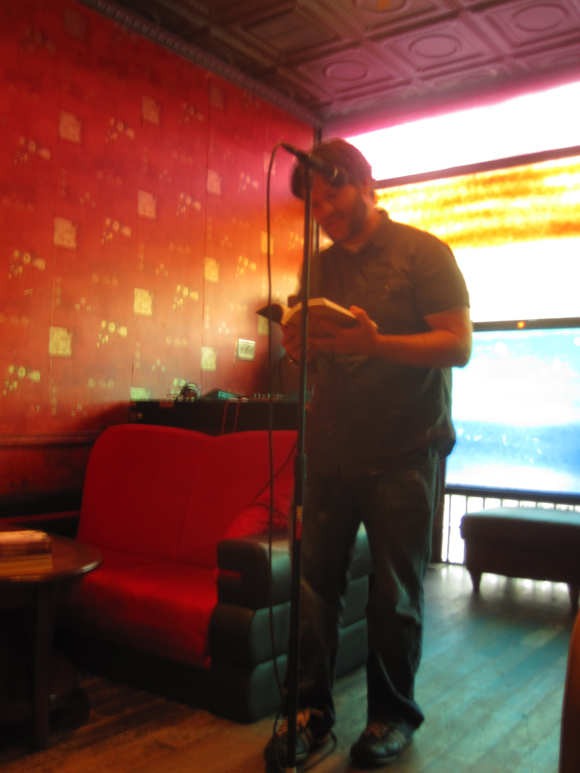
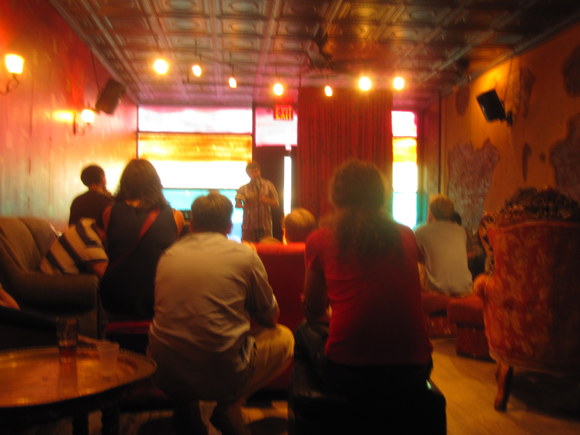
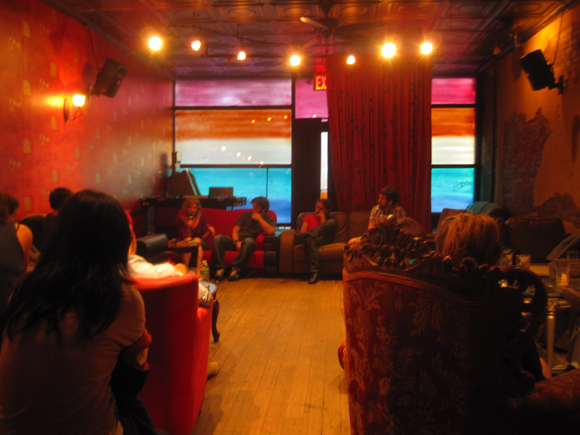
While it may not have been as cool as the reading that took place last week, the second edition of Soda Series, brought to you by Greg Gerke and John Dermot Woods, happened in Prospect Heights last Sunday. Holy crap did it have a good line-up. Matt Bell, ladies and gentlemen.

IMG_5574

Matt read from his new story collection coming out on Keyhole later this year. If you’re a fan of Matt’s writing then you should start getting very excited because it is very, very good. He had a couple gallies to pas around. Mr. Peak and I fought for a copy with our teeth.

IMG_5577

The inimitable John Madera. John and I got into a heated discussion over literature, which inevitably lead into a discussion about the meaning of art and, subsequently, to the meaning of life. Shit got a little deep and that was just fine with me.

IMG_5578

I’m glad I went cause I got turned on to Jeff Parker. Jeff is a very funny man with very insightful things to say. And apparently he’s a skateboarder from Central Florida, which makes him nothing less than a King among men in my books. I bought his book and he wrote his favorite quote from T.S. Eliot in it: “Hello Mr. Death. How do you like your blue-eyed boy now?” So good.

I didn’t get a good pic of Amber Sparks, unfortunately. It was her first reading and she did a bang-up job. She got all high tech and read from her iPhone.

IMG_5582

The writers in discussion. Thanks to John and Greg and all the writers for making it happen! Soda Series is swiftly becoming something very good to look forward to.

Friday, July 16th

120 in 2010: We’re Getting On.

newbookcover

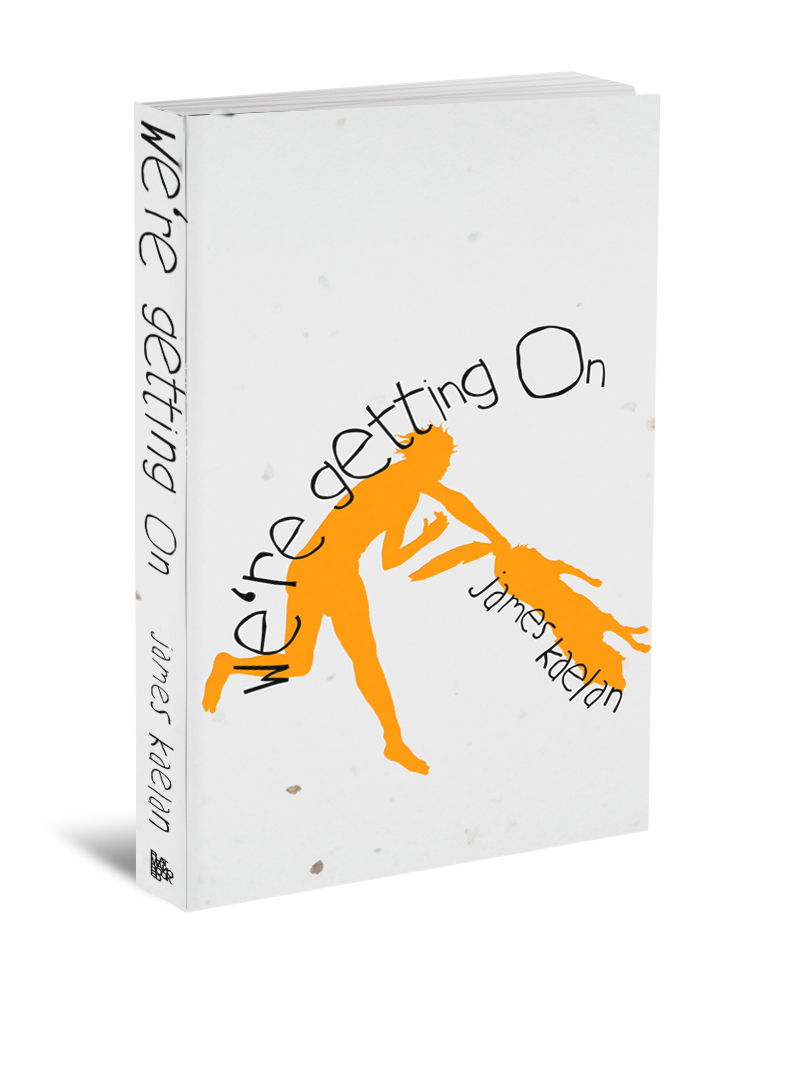
It’s impossible to talk about this book without talking about how it was made so we’ll get that out of the way first. Kaelan has embraced the idea of the book-as-object, adding another layer of immersion for the reader.

Interior pages of the book are 100% recycled paper, but the cover is the impressive feat of printing: All first editions have been letter pressed on seed paper, a kind of recycled paper containing birch tree seeds that, once planted, have the capability to offset the carbon footprint of the book 10x over. It’s part of the Zero Emission Book Project, Kaelan’s effort to release and support a book without the use of unsustainable energy.

Most products of the green movement are not made to benefit the environment, but to make the consumer feel better about themselves. To alleviate a degree or two of the inherent guilt the consumer feels for being a consumer and not a sustainer. The reading experience is permeated by the objectness of the book: Running your fingers over the spruce seeds embedded in the pulpy cover, the debossed orange silhouette of a naked man swinging a coyote around his head by the tail, serve as a constant reminder of the production means used in the printing of the book.

Strange (and somewhat depressing) that it takes a book of fiction to embrace the idea of a sustainable printing. Meanwhile, mountains of nonfiction reference and instrucitonal books on becoming environmentally conscious employ conventional production means, completely dismissive of the ideals they tout.

This wildly inventive and ambitious project veers close to overshadowing the content of the book. But after reading, it’s clear that the story is only enhanced by the production means. We’re Getting On is the story of Dan, a man who can best be describe as an environmental regressionist. Dan recruits a gang of four strangers, almost on a whim, to follow him out to a tract of land where the plan is to fully remove themselves from the trappings of modern living. But it’s not long until the experiment in sustainable living fails and morphs into an exercise rejecting forward, or even lateral, movement and moves toward the direction of  regression. Dan’s totalitarian control over the group is tenuous. Cracks and divides show themselves until the structural integrity of the collective falls apart completely.

This is a book about the effect of restrictions. The object restrains itself from using simpler, cheaper forms of publishing for the sake of producing a book that has little-to-no carbon footprint. The characters in the story restrain themselves from using any sort of innovation or mode of being that would make them human. Dan strives to become something less than human, something that doesn’t that doesn’t have aspirations to rise above its environment, a struggle to become just another insignificant organism.

The story and the object make a statement in two parts: sustainable living is possible, but it doesn’t have to be what you think it is. It could be seen as an attack on sustainable living, like, taken to its logical conclusion we should all be aimed toward Dan’s goal, tearing ourselves away from progression and devolving back to homo-erectus status. But the statement the object makes is that humans are capable of living sustainably, we’ve done it before, we can do it again. And it’s possible for us to do that without backtracking on the evolutionary ladder. Dan illustrates this in the last chapter as he’s been exiled from his collective and wanders, starving and fragmented, among the harsh elements, “(A) new beginning seems beyond my grasp. I’ve gone too far in the other direction, and this isn’t a circle or a cycle, but a spectrum at the ends of which are two terminal extremes.”

Taken by itself, the story stands alone and is worth the read. But taken with the object, the reading experience becomes something larger: a book that whole-heartedly embraces a polarizing issue in a way that is passionately creative in execution and radically practical in its ideal. It’s more than reading a work of fiction, it’s actively participating in a movement.

Buy it here from Flatmancrooked.

kaelan-with-dog-230x300

Monday, July 12th

Annalemma Salutes: Jesse Hlebo.

mary-reshoot

My blood pumped a little faster when I opened up my RSS feed this morning and saw two things that I loved were combined into one great thing: The Rumpus had interviewed  Jesse Hlebo. To be honest, I’d let Jesse fall off my radar a little bit since he sent us some photos for a piece we ran in Issue #4. What a mistake. For the past year, Jesse has been putting a lot of his contemporaries to shame with his never-ending enthusiasm and work ethic. Check out Swill Children, a small press and record label started by Jesse and a few of his friends. Already they’ve released  a fistfull of 7″ records, a zine featuring the photography of David Potes and a lit and arts broadside called _Quarterly. Oh, and he’s only 21.

For your dedication to positivity and community within the arts, for your inspirational work ethic, for your accomplishments in creating beautiful things, Annalemma salutes you, Jesse Hlebo.

Friday, July 9th

Grain & Gram.

Picture 6

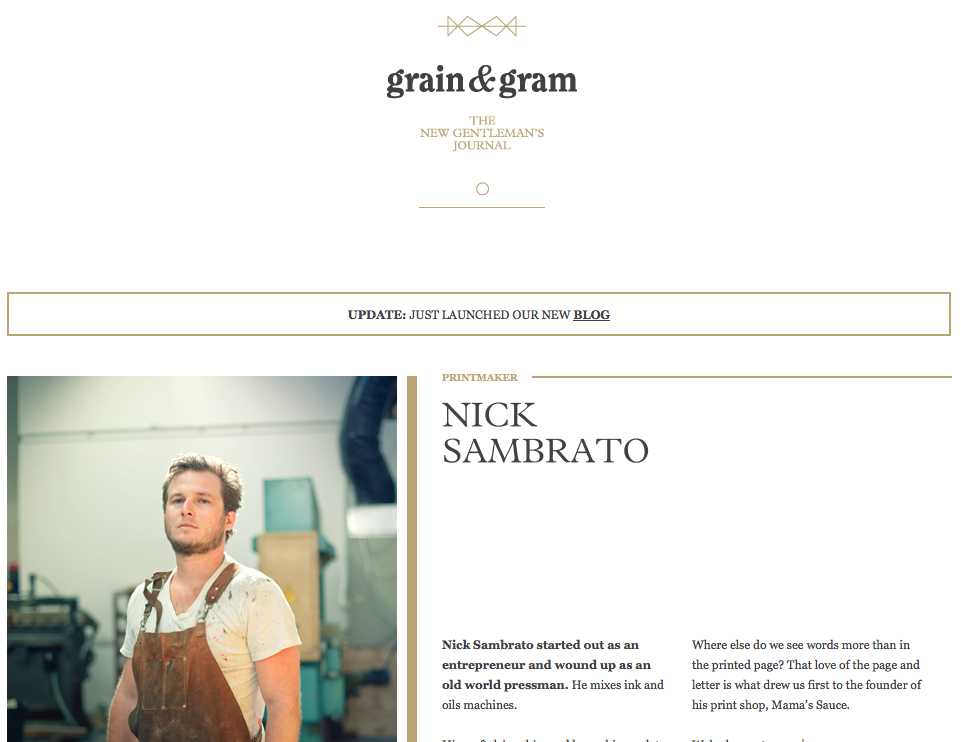
Issue Five contributors Danny Jones and Jonpaul Douglass have started a new monthly online publication dedicated to gentlemen and the crafts that they love. Grain & Gram interviews men immersed in, and enthralled by, the process of making things.  The second issue went live yesterday and features letterpress guru Nick Sambrato, of Mama’s Sauce Print Shoppe. My favorite thing about G&G is the scroll-ability of the page. Most websites are obsessively all about the clicks. Danny’s meticulous attention to detail and angular design style paired with Jonpaul’s rich, textured photos eliminate any desire to leave a page, making the G&G reading experience a smooth and engaging one. Cheers to Danny and Jonpaul for, yet again, making something very cool. Looking forward to seeing who they spotlight next.

Wednesday, July 7th

WTF, Chicago?

book bike

A few months back this blog saluted Gabriel Levinson, operator of the Book Bike. Chicago thinks the Book Bike is a threat to the public process and decided to shut him down. I think that is fucking bullshit. Absolute, utter bullshit. In spite of all the dubious and downright nefarious things the city of Chicago daily turns a blind eye to, their swift arm of justice has effectively obstructed one of the primary threats to Chicagoans: free literature. Way to go, Chi (slow clap). Way. To. Go. {via. Hat-tip to Vol. 1}

Monday, June 28th

The Last Taboo.

corp_8-14-08_4261

(image by Michael Rubenstien)

Julia Whitty‘s dissection of the population crisis, The Last Taboo, at Mother Jones is a fantastic piece of journalism that will most likely change the way that you look at the world. The article is an impressive objective look at the issue of overpopulation that manages to skirt all the negative connotations, from racism to totalitarianism, that the subject tends to dredge up.

Whitty’s assertions: 1) Global birthrate must fall if the planet is to sustain all the people currently on it. 2) The most effective contraception is properly educated women who are prospering financially. 3) The most effective way of accomplishing this is through micro loans.

Thursday, June 24th

Connection.

connect-one_liver

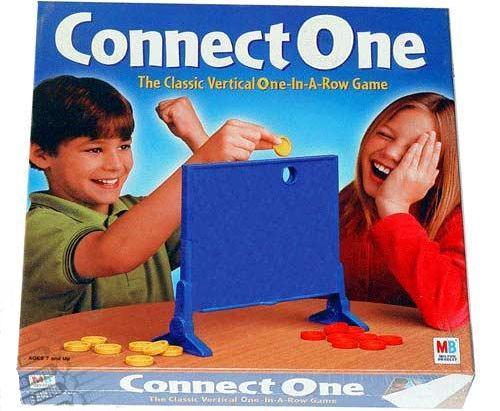
Last week we had a discussion about community and it became clear that the majority among us indie lit writers and publishers (that felt moved to comment on this blog) believed that writing and publishing with the indie lit community in mind may not be the primary goal, but was very important to keep in mind.

Since then, it’s become abundantly clear to me that the writing that we produce and publish, the stuff that all this wall head beating is for, is being marketed by us, right back to us. We are the audience and we are the producers. It’s created a very clear niche.

The positive effect seems to be that with each powerful story that we write, with each novella and journal we publish, we seem to up the bar for one another, making a decent training ground for us to hone our chops in the hopes that we may be able to graduate to the big leagues. However, some of us are fine just where we are, harboring no interest in publishing with, or on the level of, a major publishing house. A lot of those guys have fucked the publishing industry into the ground with their inability to adapt to a changing market, so why would you want to have anything to do with them?

The negative effect is that the more we write and publish toward each other, the more insular we become, the more splinter factions of style choices are created, the smaller the niches grow until it’s Writer A writing a story for the singular audience of Writer B and vice versa, ad infinitum, the literary version of a circle jerk.

The problem: We, as an indie lit community, aren’t connecting to readers. Independent film has had its boom, and was shortly followed by a boom in independent music. It’s time independent literature had a boom of its own.

There’s a prevailing attitude these days is that no one reads anymore. This is bullshit. Books haven’t lost their power to speak to people and there are folks out there who want to read, they just don’t know what to read. When faced with an overabundance of choices, a person is going to go with what’s familiar. That’s why the bestselling authors stay bestselling authors and why it takes a new author at least a $100k marking campaign to tap into that list. There are people out there craving the good words we’re producing but we’re nowhere close to reaching them. However, as indie publishers and writers, we don’t really have $100k to throw around on marketing campaigns. So what can we do to connect with readers outside of our immediate circle? Do what we’ve always done: start small.

1. People react most to word of mouth. Recommendations are how people make choices on what book they’re going to read next. Did you love The Adderall Diaries? Suggest it to a friend. Did We Take Me Apart change your life? Pass it on to someone you love and tell them that it means a lot to you. Do book trades. Promise your girlfriend that you’ll read the Harry Potter books she holds so dear if she reads A Jello Horse.

2. Ask your friend’s band if you can sell your book at the merch table at their show. If you’re book looks lonely at the table all by itself then sell other books you like. Contact us publishers, I’d happily send out a stack of mags if someone said they were going to sell them for me at a rock show.

3. Start an indie lit book club! Holy crap are book clubs awesome, sitting around a friends living room one night a month drinking wine talking about books. Damn good times, my friend.

4. And blog, people. For the love of god, blog. If you love a book, write a review. It doesn’t even have to be a great review, you don’t even really need to say anything more poignant than, “This is a good book. Here’s why. You should buy it.”

There’s people outside of the writing game who are looking for good words and they’re not finding them. Instead they’re going with whatever’s on their immediate field of vision, meaning books published by corporate publishing houses. Last week my friend IM’d me saying he wanted to start reading some novels so he bought Never Let Me Go. However he claimed he had a short attention span and thought short stories would be more his speed. I sent him links to AM/PM, SFAA and A Common Pornography (the HP version. Technically not an indie lit book, but definitely a gateway to it). He added them to his cart at Powell’s almost immediately. People have a fever, they need good words to cure them. You are the doctor. Prescribe them some good stuff.

As writers we can’t sit back and let the publisher worry about how this is going to get into the hands of readers and vice versa. This is something we love and no one’s going to market this stuff for us, so the onus is on us as writers and publishers to get it out to people who are going to react to it.

These are just some beginning ideas on how indie publishers and writers can connect to readers. If you have nay others please shout them out in the comments. We’re all in it together.
Wednesday, June 16th

Happy Bloomsday!

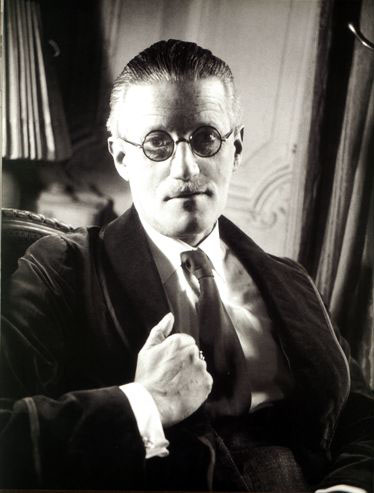
jamesjoyce

June 16th is the day we hoist a glass to the most linguistically crazy Irishman that ever lived, James Joyce. To celebrate, Annalemma alumn, William Walsh, has graced a handful of lit blogs with excerpts from his new collection based on the work of Joyce. William explains:

The book collecting all of these Joycean derivations is called Unknown Arts, and it will be released by Keyhole Press in February 2011. The title is inspired by Joyce’s epigraph from The Portrait of the Artist as a Young Man: “And he sets his mind to unknown arts.” It includes texts and poems cut from all of Joyce’s works, including the verse and his play Exiles.

Kick your heels up with a glass of Jameson’s, adjust your eyepatch, put that erotic love letter on hold for a second and enjoy your Bloomsday courtesy of Mr. Walsh. Take it away, Bill…

BLOOMING!
William Walsh
A text derived from Ulysses by James Joyce (1922)

It was too blooming dull sitting in the parlour with Mrs. Stoer and Mrs. Quigley and Mrs. MacDowell and the blind down and they all at their sniffles and sipping sups of the superior tawny sherry Uncle Barney brought from Tunney’s. The blooming stud was too small for the buttonhole of the shirt, blooming end to it. Sure, the blooming thing is all over. M Bloom you’re looking blooming Josie used to say after I married him well its better than Breen or Briggs. So lonely blooming.

Looking for more of a Bloomsday fix? William is getting a few other lit blogs in on the fun. Head on over to Big Other, Artiface, Keyhole, Letters With Character and The Kenyon Review for more.

Tuesday, June 8th

Issue Seven Theme and Call to Submit.

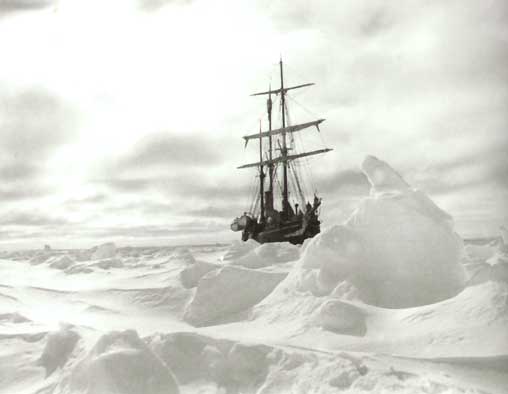
Endurance  fast in icepak

Announcing the theme for the next print issue of Annalemma and the call to submit.

Every day the world tests our will, our ability to keep moving forward. With this in mind we chose the theme for Annalemma Issue Seven: Endurance.

The word has a connotation of athletic ability and physical stamina. But the mind is more willful than the body. This is not a call for sports stories. This is a call for stories about the power to persist in the face of obstacles. Suggested questions to consider (but are in no way required to address):

– Why do you persist? What keeps you from throwing your hands up to the world and going to live in a cabin in the woods?

– What is it that fuels the pursuit of your dreams or goals?

– Who would you give up those pursuits for if they asked you to? Who has that power over you?

– What happens when someone/something can’t be stopped?

– How do you deal with an immovable object in your way?

– When is it okay to quit? Is it ever?

– Where do you go when there’s nowhere left?

The specs:

We are accepting fiction and creative nonfiction submisions. No submissions over 5000 words will be accepted. Deadline is Friday, August 6th, 2010. Any submissions not pertaining to the theme will be considered for online publication only.

One submission at a time please. No previously published pieces will be considered.

All rejections are final.

Submit to our Submishmash page here. If you’ve submitted to the old email address within the last month, your submission will still be read, but will be considered for online publication only. You are welcome to withdraw your current submission and re-submit a new piece through Submishmash if you want to be considered for print publication.