


Archive for the ‘FYI’ Category

Tuesday, September 7th

Eff Yeah, Bookstores!: Ada Books.

ada_outside

As if Rhode Island couldn’t get any more radder, it’s home to one of the best indie bookstores in the country, Ada Books. Humble owner and proprietor, Brent Legault, was kind enough to answer some questions over electronic mail.

What’s Ada’s origin story?

It started with the publication of Ada or Ardor: A Family Chronicle in 1969 (which is, coincidentally, the year I was born).  The book was not a hit with critics but it hit home with me after I first read it twenty-five or so years later. If I were the type to maintain a mountain of my favorite novels (I am not), Ada would likely sit at its summit. It seemed logical and fair-minded then to name the shop after it. Originally, I planned on calling it Ada or Ardor: A Family Bookshop but my wife wisely put a stop to that. (We’ve saved a bundle on signage.)


What’s the curatorial process when choosing books to stock?

The process, if you can whatever it is I do a process, is simple: I choose the books and magazines that I like or think I’ll like and hope that others agree with me. They don’t, usually, in spite of my excellent taste.

What’s the arts/literature scene in Rhode Island like and what role does Ada play within it?

The scene here is mostly serious, or artists taking themselves seriously. Humor comes in smirks rather than guffaws. My role in it is a minor one. I host a reading series, which is run by Kate Schapira (an excellent poet), where I often drink a little too much beer. I also eat more than my share of cashews or almonds and clap, politely but genuinely, when others clap.

What helps a book sell? What’s been the most successful book at Ada?

Though I’ve been selling books for more years than Justin Bieber has been alive, I still have no idea how to make a sale. I know that “weird” works, as does “obscure.” But those things sell themselves. I’m no salesman. I never “upsell” anything. I just put it on a shelf or a table and see what happens. (I will give out opinions when prompted.) The most successful book at Ada has been. . . oh, I don’t know. I don’t keep track. But I’ve probably sold more copies of Mat Brinkman’s Teratoid Heights than anything else. These days, it is shamefully out of print.

How does a brick-and-mortar store not only survive, but maintain relevance in the age of Amazon?

I don’t think my brick-and-mortar(and-paint-and-plaster) store is at all relevant “in the age of Amazon” except perhaps in a negative way. That is, I think that my customers reject or at least look down upon the Kindles and the iPads and ordering books online in general. Or perhaps they do those things but also feel a kinship with books and booksellers and want them to stick around for a little while longer.

Please describe the cat that lives in your store. If you don’t have a bookstore cat, please explain why.

My shop cat is a pure white American short hair with a pink nose and mismatched eyes. Her name is Paper and she is imaginary. I’m only at the shop 7 or 8 hours a day and I feel it would be neglectful to leave her alone for so long. Therefore, Ada Books is catless, although my wife and I have three cats at home named Ratsy, BeeBong and Pancake. They are adorable.
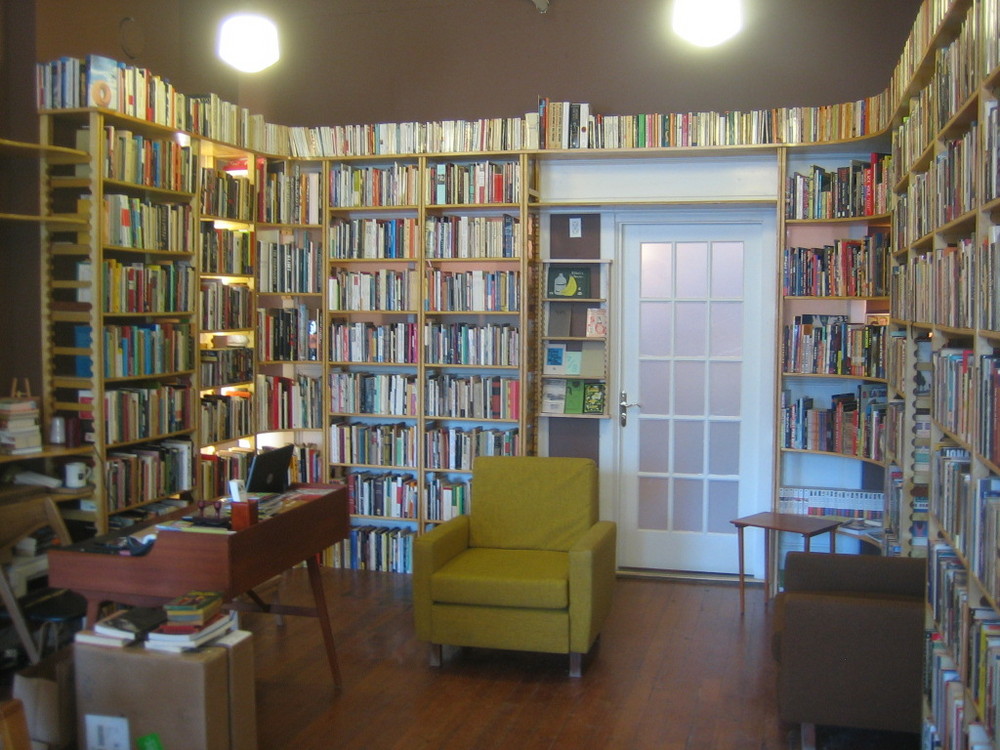
3086429080_e4e947b411_o.jpg.scaled.1000

{image via}

Friday, September 3rd

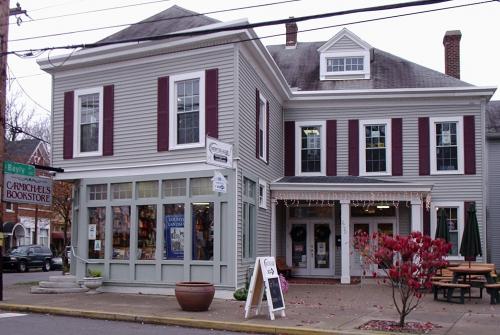
Eff Yeah, Bookstores!: Carmichael’s Bookstore.

Dec_04_Ffort_exterior

If you find yourself in Louisville, Kentucky any time soon be sure to stop by the best bookseller in town, Carmichael’s Bookstore. This interview was conducted with owner Michael Boggs via email.

What’s Carmichael’s origin story?

My wife, Carol Besse, and I started Carmichael’s in 1978 in Louisville with a little capital from a Small Business Administration loan and a hefty amount of bookstore experience. We had worked for 5 years for Barbara’s Bookstores in Chicago and learned most of the mechanics of the bookselling business there. We both had Kentucky ties and at that time Louisville had no urban bookstores.

What’s the curatorial process when choosing books to stock?

I wouldn’t call the process “curatorial” since bookselling is an exercise in commerce, and we have to be mindful of stocking books that will appeal to our customers. That said, the stock in our stores is comprised of about 70 % “backlist”, which are the titles that sell over and over, year in and year out, and 30 % “frontlist”, the titles that are newly published each year. Backlist titles change slowly as authors fall in and out of favor, and as interests change over the years. Because our stores are small, I have to select stock carefully and each publishing season I buy only a fraction of the thousands and thousands of new titles presented to me by publisher’s sales reps. The process is more art than science, with hundreds of factors going into each decision: Does the book fit with our customer’s taste? What is the quality of the publisher? Does the author have a track record? Is the subject of the book original? Does the sales rep have any helpful information? What does the cover look like? And on and on.

What’s the arts/literature scene like in Louisville? What’s Carmichael’s role in the lit/arts community?

From the beginning Carol and I conceived of Carmichael’s as a so-called “third place” — a locale ingrained in the community that isn’t home or work. We have anywhere from 75 to 100 author events a year, many with local poets and beginning writers. We have wonderful independent publisher in Louisville called Sarabande Books that has a first-rate list of poetry and fiction. And, in the region, we have number of nationally recognized authors with ties to our area: Wendell Berry, Bobbie Ann Mason, Barbara Kingsolver, Silas House, Sena Naslund and many others.

Carmichaels-700945

What helps books sell? What are the more successful books at Carmichael’s?

Word of mouth is the best seller for books–one reader recommends titles he loves, that person tells 3 people, and suddenly you have an exponential groundswell for a book. As for national media, NPR programs provide the publicity and interviews that our customers respond to best. Other venues that are good for us are The New Yorker, especially exerpts of Non Fiction, The New York Times, The New Yorker Review of Books, with most other magazines trailing behind. We get little play from blogs or internet sources.

How does a brick-and-mortar store not only survive, but maintain relevance in the age of Amazon?

When it comes to relevance and Amazon, that’s kind of a no brainer. In the world of books, Amazon is a place of commerce and little more. Books were simply an easy entre into creating a mail-order of WalMart. They don’t care much about books because so few people actually buy them–they really want to sell all the other stuff that large parts of the population desire and that have higher profit percentages. And that’s not books. And the Kindle is a toy that is unlikely to have more longevity than cassette tapes. Whatever the paradigm that lasts for 20 or 30 years, it defninitely isn’t Amazon or the Kindle.

Please describe the bookstore mascot.

We’ve had cats in the store over the years, but are currently without any mascot.  Maybe the closest we have to a mascot is local legend Hunter S. Thompson.

Screen shot 2010-09-03 at 12.27.06 PM

{image via}

Thursday, September 2nd

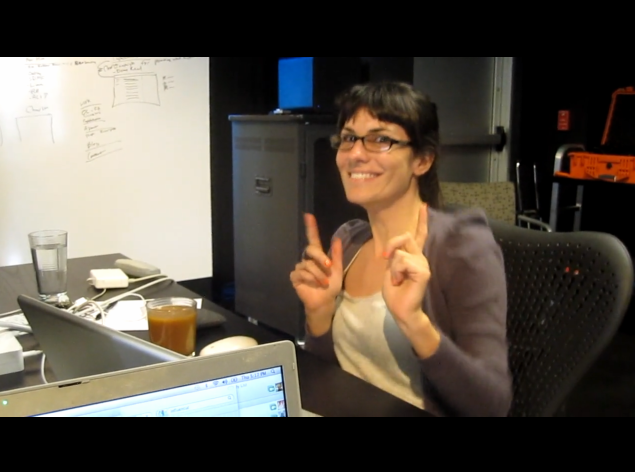
Design Session Dance Break.

Screen shot 2010-09-02 at 5.28.07 PM

We’re hard at work laying out Annalemma Issue Seven: Endurance. To break up the monotony, print designer Jen O’Malley takes an opportunity to lay some tasty shapes on some phat beatz.

Tuesday, August 31st

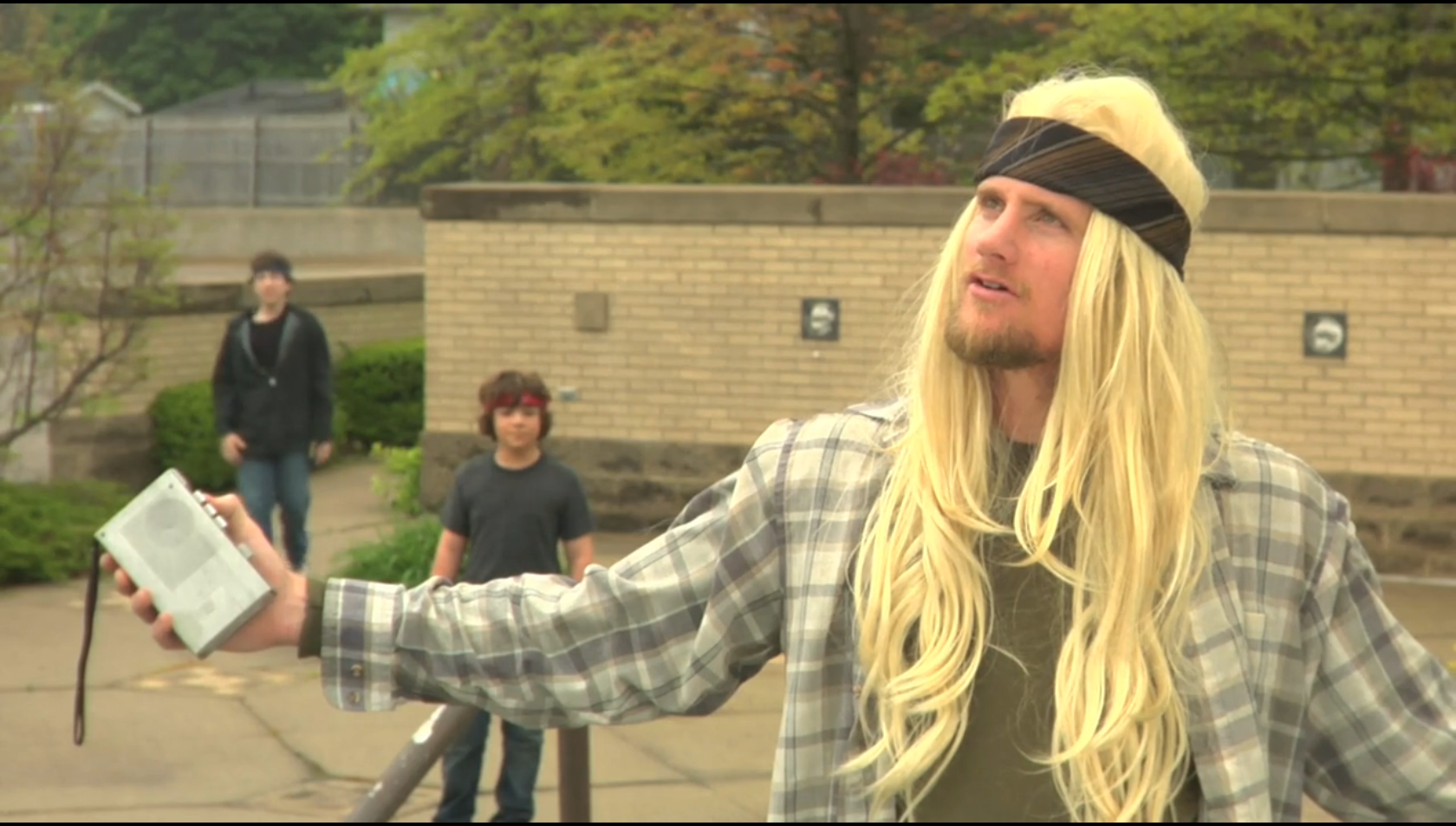
Dragon Pilot.

Picture 1

A crew of dear old friends put together a pilot for Dragons, an original comedy series about two skate buddies transcending their human forms and attaining enlightenment, starring skate legend Mike Vallely. Treat yourself to a half hour of good vibes.

Monday, August 30th

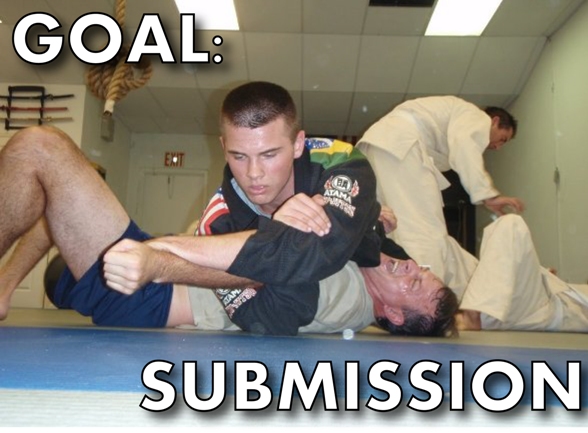
Submissions Are Open.

SUBMISSION1

After a few weeks of taking a breather, we’re opening up submissions again. As we put the finishing touches on the print issue we’ll be considering all submissions for web publication only. If you’re looking to get published on the website (and why wouldn’t you be?) bear in mind that being succinct is important. And if you’re going to going to submit something over 3000 words, it had better grip from the first sentence and never let up. Click here to submit them gems.

Friday, August 27th

Anniversary Sale.

annalemma

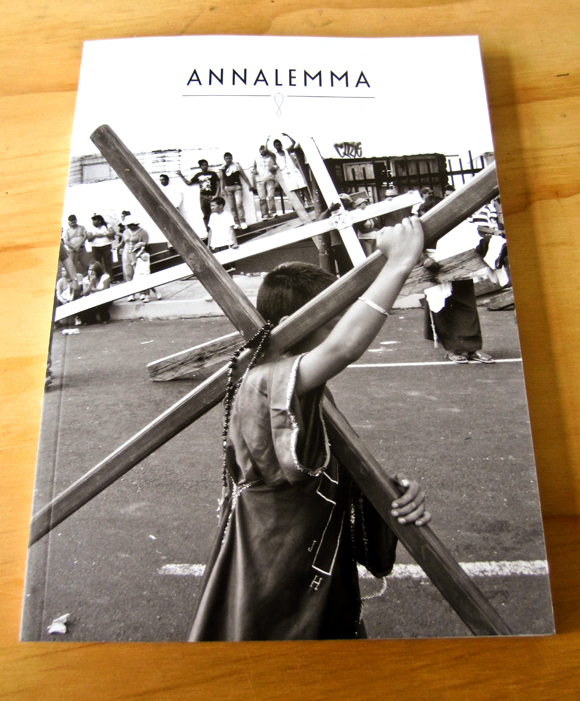
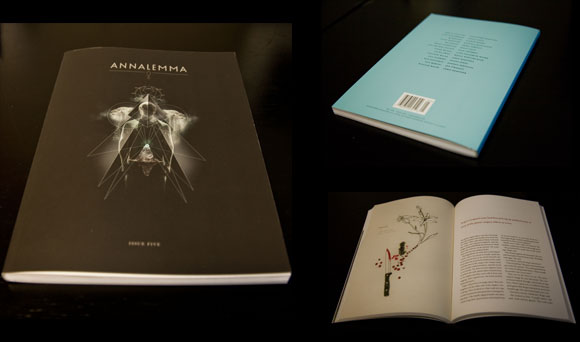
It’s officially been one year since the current site when live and we started publishing fiction and essays on a weekly basis. To celebrate, we’re taking 20% off the price of Annalemma Issue Six: Sacrifice and Annalemma Bundle for today and today only.

Also there will be a small ceremony in the break room during lunch. Cake will be served. Janelle will be collecting $2 from everyone to cover the cost of the cake.

Thursday, August 26th

ZNH.

3c26945v

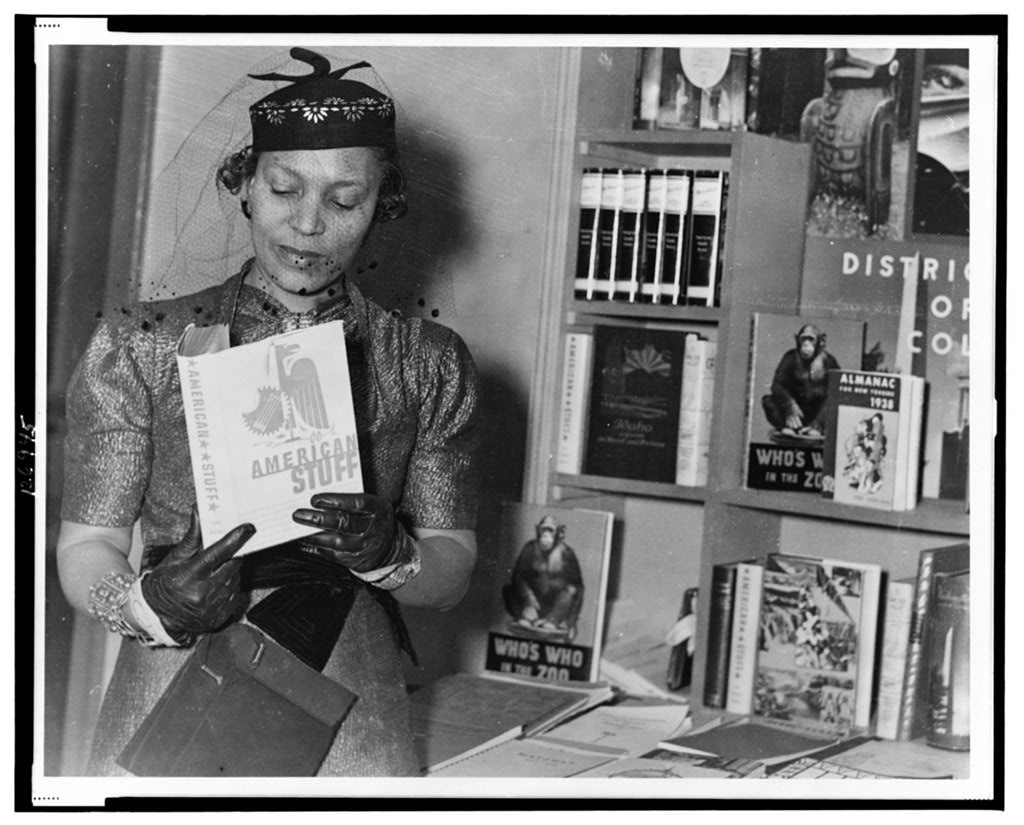
The ink is dry on the papers that say we got permission to do something very cool for Annalemma Issue Seven: Endurance. Keep an eye out for a more formal announcement next week.

Monday, August 23rd

Eff Yeah, Bookstores!: Quimby’s.

34472_408558254369_24307769369_4669433_7097530_n

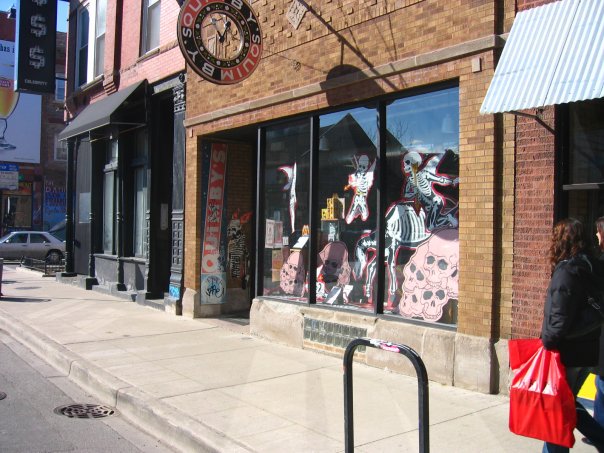
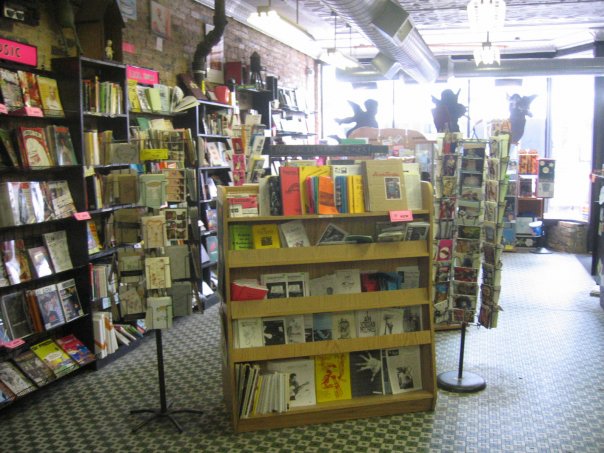
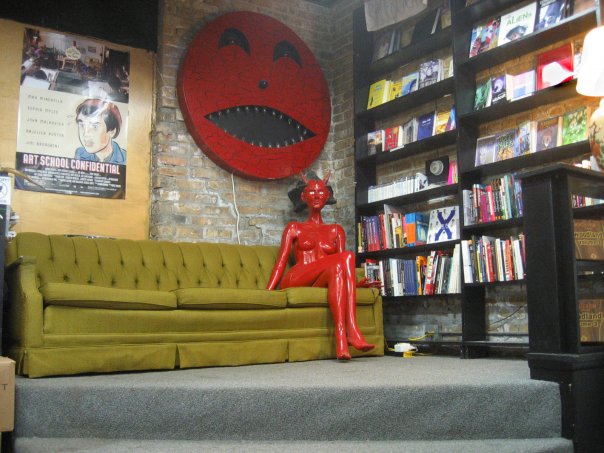
Chicago is a reading town. Reading towns demand good bookstores and it doesn’t get much better than Quimby’s. A landmark in Chicago’s literary scene for almost two decades, Quimby’s is the archetype for what a good bookstore should be: weird, intriguing, fun, surprising and a bit mysterious. Owner Eric Kirsammer answered a few questions about how Quimby’s achieved this level of awesomeness.

n24307769369_799457_6846

What’s the origin story of Quimby’s?

Quimbys was started in 1991 by Steven Svymbersky.  He was doing a zine called Quimbys in Boston then he decided to move to Chicago and open a store by the same name.  Steven sold the store to me in 1997.

What’s the curatorial process when choosing books to stock?

We look for any type of publication that is about things out of the mainstream.  Anything weird and important.  There  are so many things being published that just do not get the exposure they deserve.  For zines we take a very broad range of things on consignment.  This allows us to carry a lot of different zines and allows someone just starting out to get their book on the shelf.

n24307769369_799460_8315
What helps a book sell? What are some of the more successful books at Quimby’s?

Quality writing in an interesting package.  We do well with things that hit it on multiple fronts.  Some of the books that we do well with are anything by Chris Ware, Dan Clowes or Dave Eggers.

Quimby’s has achieved this legendary status among independent bookstores. How did this happen and how do you maintain relevance in the age of Amazon?

We have stuck to our mission of carrying the offbeat and being very open to people just starting to publish.  We also hold a lot of events which has built community support.  We try to stock the books our customer wants.  Quimbys is a niche bookstore are we have never had the desire to become mainstream.

Please describe the cat that lives in your store. If you don’t have a bookstore cat, please explain why.

We do not have a store cat for several reasons,
1.  I would always be worried about the cat running out the door.
2.  I don’t think the cat would get the attention it deserves.
3.  Our store mascot is Chris Ware’s Quimby the mouse and cat and mice just do not mix.

n24307769369_799456_6314

Thursday, August 19th

Hey Chicago!: Go See Max Kauffman.

Blinding-Clarity-web

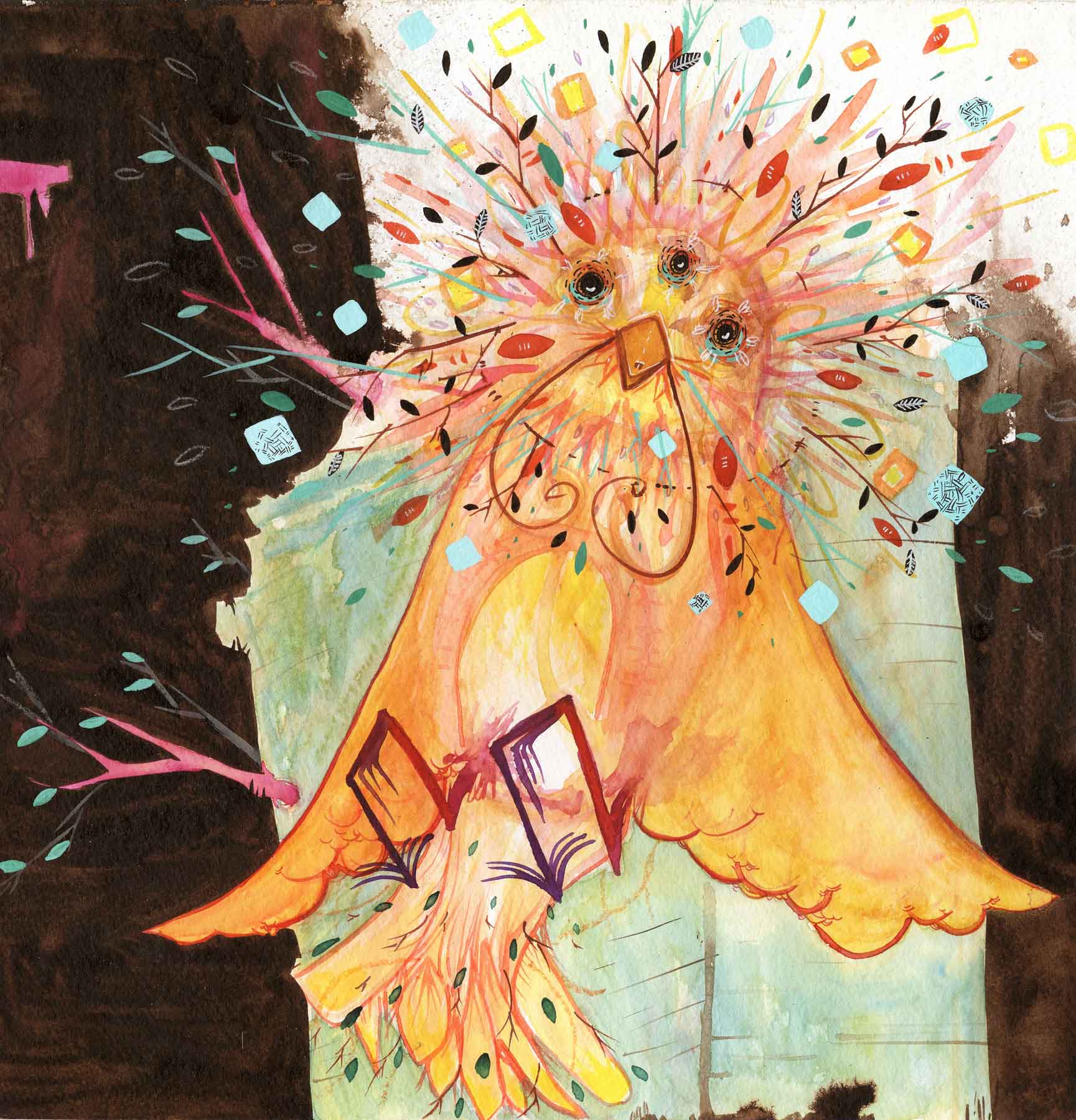
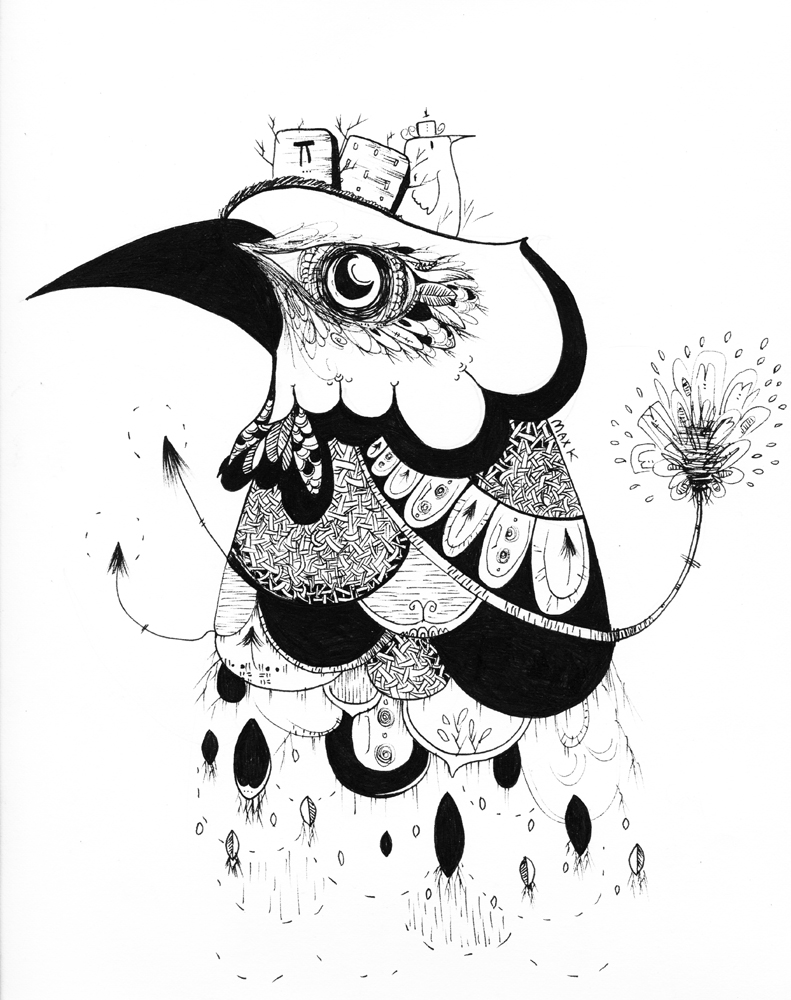
Issue Five contributor Max Kauffman is throwing his first solo show in a long time in Chicago. Go and check out his freakiness next month. From the press release:

R’fuah- new works by Max Kauffman

presented by Pawn Works

1050 N Damen Ave Chicago, IL

opening reception Friday Sept 10th 6-10 pm

available by appointment 312-841-3986

fade web

R’fuah: a renewal of spirit. A way of looking at things you hold dear, without idolizing them: knowing that these inanimate things you keep are important because of the emotions you impart on them. Are they real? Are the emotional ties meaningful because of the item or because of the emotion itself?

These thing we hold dear: they keep us happy, bittersweet, positive, appreciative of the things in our life. Why? Are they simply coping mechanisms or do they actually uplift us? From prophets and idols and relics to symbols and talismans of today, we alternately assign them power and draw power from them. We are actually pulling on the strength within ourselves, our thoughts and spirits when we look to these things. When we fall on dark times, we become even more attached to the inanimate—sure and committed to the power we believe they bring, until the storm passes and we relinquish them until next time.

This renewal, this evolution, this cycle of spirit and material. Does it make us more or less human? By putting our faith in objects, are we overpowering or overpowered by them?

They calm us; they bring us peace. R’fuah.

R’fuah will feature new mixed media paintings on paper and wood, ceramic works and a site specific installation.

Show runs through October 10th

for more information contact marz09@yahoo.com or mhkauffm@gmail.com

Thursday, August 19th

Scene Report: Dzanc Best of the Web.

Picture 1

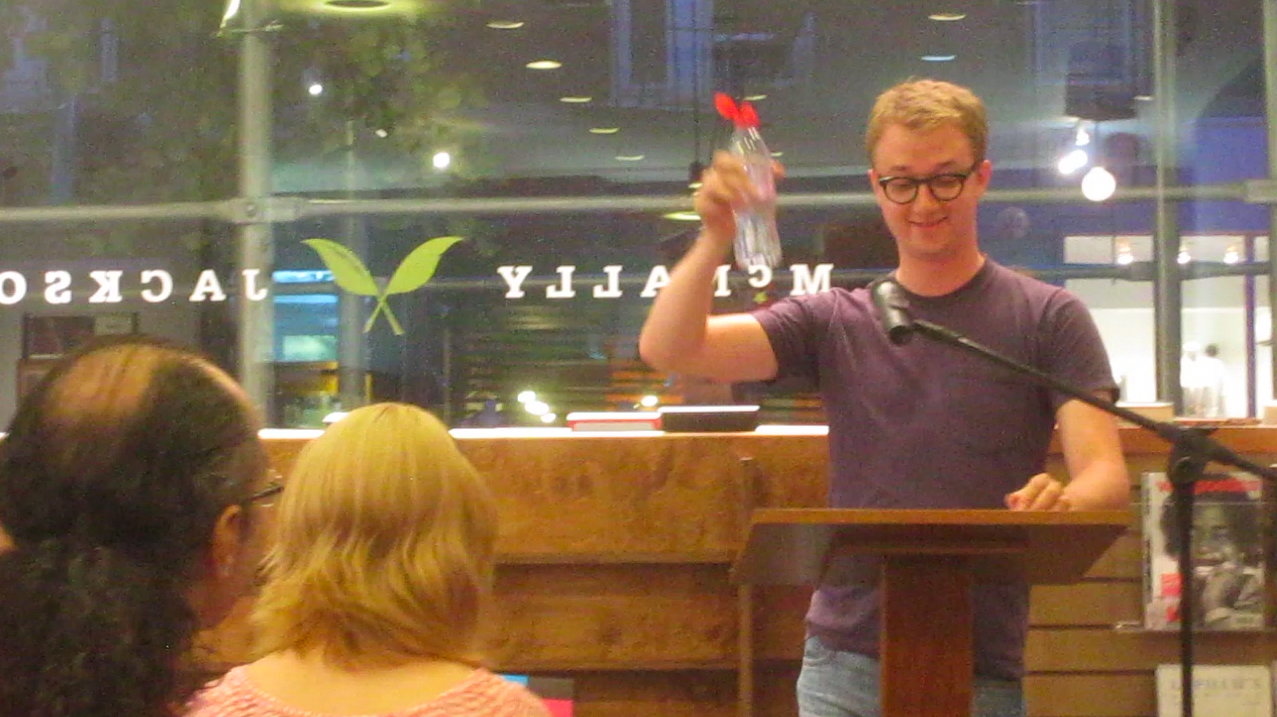
This is Sasha Fletcher. His writing is like walking towards a door but first putting on a blindfold and spinning in circles and then trying to walk towards a door and eventually ending up at the door but you’re not entirely sure how you got there. Sounds nauseating, but it’s a delightful experience.

Sasha emceed the Dzanc Best of the Web reading that took place last Tuesday at McNally Jackson. Other people read there. And I took videos of them too, but I was too far from the PA and they reading in semi-hushed tones. Sasha speaks loud when he reads in front of an audience. He knows how to perform. That’s what you’re doing when you’re reading at an event by the way. You know that, right? You’re supposed to be entertaining the folks in the audience. If you move some people on an emotional level, that’s fantastic, but priority number one is to be compelling. Sasha’s compelling. Take note, readers.

Leigh Stein read some very good poems. Elissa Bassist read some interesting anxieties on writing about Infinite Jest originally published on The Rumpus. For an extensive take on the evening, head over to Vol. 1.